
Have you ever stood up after a few hours at your desk and felt like your hips needed a minute to straighten out? Maybe your neck feels stiff after working on a computer, your upper back feels tight after a long drive, or one side of your body simply feels like it moves more easily than the other.
These experiences are incredibly common.
Our bodies are influenced by everything we do throughout the day: sitting, standing, working, exercising, sleeping, driving, carrying children, using our phones, playing sports, and even how frequently we change positions.
When stiffness or restricted movement starts interfering with your day, osteopathy may be one way to help you better understand how your body is moving and where certain areas may benefit from more mobility, strength, or movement variety.
At Restorative Touch Physiotherapy in Hamilton, our approach to osteopathy looks beyond a single sore or stiff area. Instead, we consider how different regions of the body move together and how those relationships may influence the way you feel.
Can Osteopathy Help with Posture?
It can — but probably not in the way you might think.
When people hear the word posture, they often picture someone sitting perfectly upright with their shoulders pulled back and their spine completely straight.
But there is no single “perfect posture” that everyone needs to maintain throughout the day.
The human body is designed to move.
Your posture naturally changes when you sit, stand, walk, reach, bend, exercise, relax on the couch, or look down at your phone. These positions are not automatically harmful simply because they don’t match the traditional idea of “good posture.”
The bigger issue is often not one particular position.
It is spending too much time in the same position without enough movement or variation.
Instead of thinking:
“I need to fix my posture.”
A more useful question may be:
“Do I have enough movement options to comfortably change positions throughout my day?”
That is where osteopathy and mobility-focused care can be helpful.
Why Does Your Body Feel Stiff After Sitting?
If you work at a desk, you may notice stiffness in areas such as your:
- Neck
- Upper back
- Shoulders
- Lower back
- Hips
- Hamstrings
This does not necessarily mean something is damaged or that your posture is “wrong.”
When you stay in one position for a long time, your body simply isn’t moving through the range of motion it normally experiences.
Think about sitting at a computer for three hours. Your hips may remain flexed, your upper back may move very little, and your neck may repeatedly stay in a similar position while looking at a screen.
Then you stand up.
For the first few steps, everything may feel a little stiff.
Usually, once you start moving, things begin to loosen up.
This is one reason regular movement throughout the day can be so valuable.
A five-minute walk, a few shoulder movements, standing during a phone call, or simply changing your sitting position can sometimes be more useful than constantly trying to hold yourself in a “perfect” posture.
Osteopathy Takes a Whole-Body Approach to Movement
One of the principles behind osteopathic treatment is looking at how different parts of the body work together.
That does not mean pain in one area is secretly being caused by another part of your body.
Instead, your practitioner may examine nearby regions because human movement rarely happens at only one joint.
For example, imagine your neck feels stiff when you turn your head.
Your neck obviously matters.
But turning your head also involves movement through your upper back, shoulders, and rib cage.
An osteopathic assessment may therefore look at:
- Neck mobility
- Upper-back movement
- Shoulder mobility
- Rib movement
- Breathing patterns
- Muscle tension
- How movement changes from one side to the other
Looking at these areas together can provide a more complete picture of how your upper body is moving.
The same idea applies to other areas of the body.
If your lower back feels stiff, your osteopathic practitioner may also assess your hips, pelvis, legs, and upper back.
If your shoulder feels restricted, they may also examine your neck, upper back, ribs, and shoulder blade.
Rather than focusing exclusively on the location of your symptoms, osteopathy considers the movement system surrounding that area.
What Is Mobility?
Mobility is your ability to move through a range of motion with control and relative comfort.
Good mobility does not mean being extremely flexible.
You do not need to touch your toes, perform the splits, or have enormous amounts of joint movement to be healthy.
What matters is having enough movement for the activities that are important to you.
For one person, that might mean comfortably turning their head while driving.
For someone else, it might mean reaching overhead at work.
For an athlete, mobility may mean being able to squat, rotate, run, jump, or change direction efficiently.
Mobility becomes more noticeable when you start losing it.
You might notice that:
- Turning your head while driving feels restricted
- Reaching overhead feels stiff
- Your hips tighten up after prolonged sitting
- Getting out of a chair takes a few moments
- Bending down feels uncomfortable
- Your back feels stiff first thing in the morning
- One side of your body moves differently from the other
- Certain positions during exercise feel difficult
- Squatting or lunging feels restricted
- Everyday movements don’t feel as smooth as they used to
These are all reasons someone may seek an osteopathic assessment.
How Can Osteopathy Help Improve Mobility?
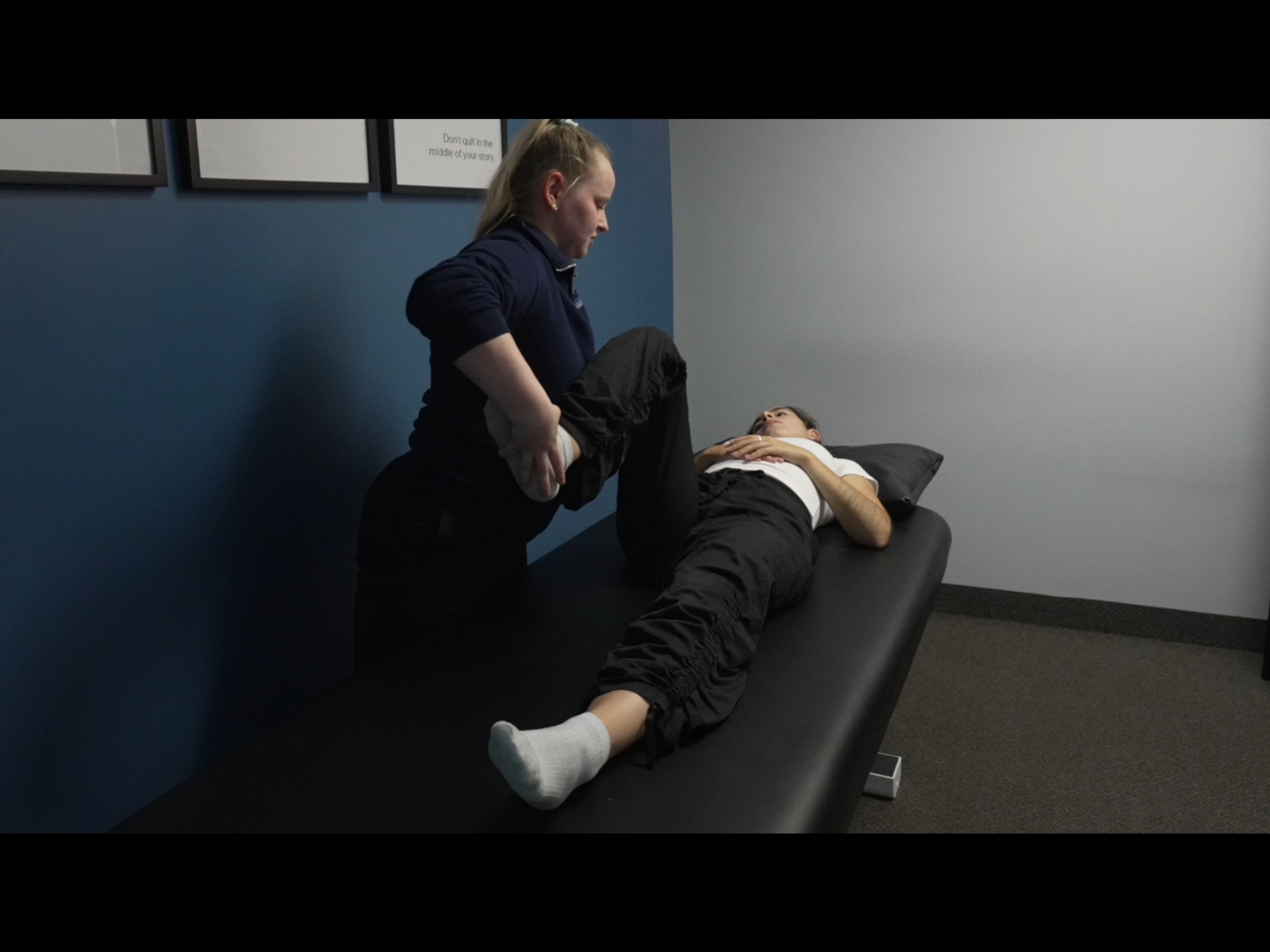
Osteopathic treatment often uses hands-on techniques aimed at helping stiff or sensitive areas move more comfortably.
Depending on your assessment and goals, treatment may focus on muscles, joints, connective tissues, and surrounding areas that contribute to a particular movement.
The goal is not to force your body into a supposedly ideal alignment.
Instead, the goal is often to make movement feel easier and give you more options for how you move.
Treatment may be useful when combined with:
- Mobility exercises
- Strengthening
- Regular physical activity
- Movement breaks
- Breathing exercises
- Gradual exposure to movements that currently feel restricted
- Changes to work or activity habits
Hands-on treatment can be helpful, but it should not be the only strategy.
Long-term improvements in movement usually involve using the movement you gain.
Osteopathy Isn’t About “Fixing” Bad Posture
You may have been told at some point that you have:
“Bad posture.”
“Rounded shoulders.”
“A crooked pelvis.”
“A forward head.”
These descriptions can sometimes make people feel as though something is structurally wrong with their body.
But posture varies enormously between healthy people.
Someone can sit upright and experience back pain.
Someone else can sit slouched comfortably for hours.
Posture alone does not tell us the whole story.
Symptoms are influenced by many factors, including:
- Activity levels
- Sleep
- Stress
- Physical conditioning
- Previous injuries
- Work demands
- Exercise habits
- How long you stay in one position
- Your body’s current tolerance for those demands
Instead of obsessing over one ideal posture, it can be more useful to develop the ability to move between many different postures comfortably.
Our favourite way to think about it is:
Your best posture may simply be your next posture.
Sit.
Stand.
Walk.
Lean back.
Stretch.
Move your shoulders.
Change positions.
Your body generally prefers variety.
Posture at Work: What Should You Actually Do?
If you spend most of your day at a desk, you don’t need to constantly monitor whether your shoulders are pulled back or whether your spine is sitting at a particular angle.
A more practical approach is to make your workstation comfortable and move regularly.
Try changing something every 30–60 minutes.
That might mean:
- Standing up for a few minutes
- Walking to get water
- Changing your chair position
- Looking away from your monitor
- Moving your neck gently
- Reaching your arms overhead
- Taking a short walk
- Alternating between sitting and standing
- Doing a few repetitions of a mobility exercise
The movement does not need to be complicated.
Consistency matters more than finding the perfect stretch.
Why Your Hips May Feel Tight After Sitting
“Tight hips” are one of the most common complaints we hear from people who sit for much of the day.
But feeling tight does not always mean your muscles have physically shortened.
Sometimes stiffness is simply your body’s response to being in one position for a long period of time.
Other times, hip mobility, strength, activity level, previous injuries, or exercise demands may contribute to how the area feels.
An osteopathic assessment can look at how your hips move alongside your pelvis and lower back.
Depending on what you need, your treatment plan may include hands-on treatment alongside exercises designed to maintain or improve the movement you’re working on.
Neck and Upper-Back Stiffness from Desk Work
Computer work can also place relatively repetitive demands on the neck and upper body.
It is common to spend long periods:
- Looking at one monitor
- Using a mouse with the same hand
- Typing
- Looking down at a phone
- Sitting with very little upper-back movement
Again, none of these activities are automatically harmful.
The issue is often the amount of time spent doing them without changing position.
Someone dealing with neck stiffness may benefit from working on movement through several areas, including the neck, shoulders, upper back, and rib cage.
This is one reason osteopathy often looks beyond the exact spot where you feel discomfort.
The Relationship Between Breathing and Movement
Breathing is something we rarely think about, but your rib cage, spine, abdominal muscles, and diaphragm all move while you breathe.
Because of this, breathing can sometimes be considered as part of an osteopathic assessment — particularly when someone feels restricted through the ribs, upper back, or trunk.
Simple breathing exercises may also be incorporated into treatment when appropriate.
The goal is not to teach you a single “correct” way to breathe.
Instead, breathing may be another tool for helping the trunk and rib cage move comfortably.
Hands-On Treatment Is Only Part of the Picture
One misconception about osteopathy is that everything happens on the treatment table.
Hands-on care can certainly be part of treatment.
But what you do between appointments matters too.
Depending on your goals, your practitioner may recommend:
- Mobility exercises
- Strength exercises
- Stretching
- Walking
- Breathing exercises
- Movement breaks at work
- Changes to your training routine
- Gradually increasing activity
These strategies allow you to continue working on your mobility outside of your appointments.
Ideally, treatment should help you become more confident using your body, rather than feeling like you need regular treatment just to function normally.
Mobility and Strength Work Together
Mobility is important, but more mobility is not always better.
You also need the strength and control to use that movement.
For example, improving shoulder movement can be useful — but strengthening the muscles around the shoulder may help you use that range more comfortably during everyday activities or exercise.
The same applies to the hips, spine, knees, and other areas.
This is why a well-rounded treatment plan may include both mobility and strengthening.
Rather than asking:
“Should I stretch or strengthen?”
The answer is often:
A combination of both, based on what your body needs.
Osteopathy for Active People and Athletes
Mobility is not only important for people with desk jobs.
Athletes may notice restrictions when running, lifting weights, playing soccer, golfing, cycling, or participating in recreational sports.
Your sport may repeatedly expose your body to certain movements.
A golfer rotates thousands of times.
A runner repeatedly loads the legs.
A soccer player accelerates, decelerates, cuts, kicks, and rotates.
A weightlifter repeatedly moves through loaded ranges of motion.
An osteopathic assessment can help identify movements that feel restricted and determine whether hands-on treatment, mobility exercises, strengthening, or changes to training may help.
When Should You Consider Seeing an Osteopathic Practitioner?
You may want to consider an osteopathic assessment if you are experiencing:
- Persistent stiffness
- Reduced mobility
- Neck or back tightness
- Hip stiffness
- Shoulder restrictions
- Difficulty with certain movements
- Discomfort after prolonged sitting
- Movement limitations during exercise
- A feeling that one side moves differently than the other
- Recurring tightness that doesn’t improve with your usual routine
You do not necessarily need to be injured to work on mobility.
Sometimes the goal is simply to help your body move more comfortably during the activities you enjoy.
Osteopathy in Hamilton: A More Complete Approach to Movement
If you’re searching for osteopathy in Hamilton, it is worth looking for care that considers more than the location that feels stiff.
At Restorative Touch Physiotherapy, our osteopathic approach considers your symptoms, mobility, daily routine, physical activity, and the way different areas of your body work together.
Treatment can include hands-on techniques alongside practical strategies you can use outside of the clinic.
The objective isn’t perfect posture.
It isn’t perfect alignment.
And it isn’t creating a body that never feels stiff.
The goal is much simpler:
To help you move comfortably, confidently, and with enough mobility and strength to do the things that matter to you.
Your Body Is Designed to Move
Our bodies adapt constantly.
Work, exercise, previous injuries, stress, sleep, hobbies, sports, and daily routines can all influence the way we move and feel.
Feeling stiff from time to time doesn’t necessarily mean something is wrong.
But when stiffness or reduced mobility starts limiting your activities, it may be worth looking at the bigger picture.
Osteopathy offers one way to do that.
Rather than only asking:
“Where does it hurt?”
We can also ask:
“What movements are difficult?”
“What areas feel restricted?”
“What activities are important to you?”
And most importantly:
“What can we do to help you move more comfortably?”
You don’t need perfect posture.
You don’t need perfect mobility.
You simply need enough movement, strength, and confidence to live the life you want.
If you’re experiencing stiffness or reduced mobility and are looking for osteopathy in Hamilton or Hamilton Mountain, our team at Restorative Touch Physiotherapy can help assess how you’re moving and develop a treatment plan based on your individual needs.