
Do your headaches ever seem to arrive at the same time as a stiff or sore neck?
Maybe you notice a dull ache at the base of your skull after working at your computer, tightness across your shoulders after a stressful day, or discomfort when turning your head while driving. For some people, headaches and neck symptoms seem to go hand in hand.
Headaches can have many different causes, and not every headache comes from the neck. However, the muscles, joints, nerves, and surrounding tissues of the neck and upper back can sometimes contribute to headache symptoms.
This is one reason someone experiencing both headaches and neck pain may benefit from having their neck, shoulders, upper back, and overall movement assessed.
At Restorative Touch Physiotherapy, osteopathic treatment takes a whole-body approach. Rather than simply treating the area that hurts, we look at how different regions are moving, what may be contributing to your symptoms, and what strategies may help you feel and move more comfortably.
Can Neck Pain Cause Headaches?
Sometimes.
Certain headaches can be associated with structures in and around the neck.
For example, some people experience headaches that seem to begin around the upper neck or base of the skull before travelling toward the side or front of the head. Others notice that their headache becomes more noticeable when their neck is stiff or when they have spent a long time in one position.
One type of headache associated with the neck is known as a cervicogenic headache.
A cervicogenic headache is considered a headache that originates from structures in the cervical spine, or neck. Symptoms can sometimes be accompanied by reduced neck movement or discomfort when moving the neck.
Neck discomfort can also occur alongside other common headache types, including tension-type headaches.
The important thing is not to assume that every headache comes from tight muscles or poor posture.
Headaches are complex, and many different factors can contribute.
Signs Your Neck May Be Involved in Your Headaches
Your neck may be worth assessing if you regularly experience headaches along with symptoms such as:
- Neck stiffness or soreness
- Reduced ability to turn your head
- Tightness around the shoulders or upper back
- Tenderness around the base of the skull
- Headaches that seem to begin in the neck
- Symptoms that become more noticeable after prolonged computer work
- Discomfort after driving for long periods
- Headaches that seem worse after keeping your head in one position
- Symptoms associated with certain neck movements
- A feeling that one side of your neck moves differently from the other
These symptoms do not automatically mean your neck is causing your headache.
They simply suggest that assessing how your neck and upper body are moving may provide useful information.
Why Are the Neck and Head So Closely Connected?
Your head doesn’t move independently from the rest of your body.
The neck, shoulders, upper back, rib cage, and surrounding muscles all work together whenever you turn your head, look up or down, reach, breathe, or change position.
A restriction or sensitivity in one area can sometimes influence how another area feels.
For example, if your upper back is particularly stiff, your neck may need to contribute more movement when you turn your head.
Similarly, someone spending several hours working at a computer may repeatedly use the same neck and shoulder muscles with very little movement variation.
Over time, some people may begin to notice stiffness, muscle fatigue, soreness, or headaches.
This does not necessarily mean anything is damaged.
Sometimes the body simply needs more movement variety, strength, recovery, or a change in how much demand is being placed on certain tissues.
How Can Osteopathy Help with Headaches and Neck Pain?
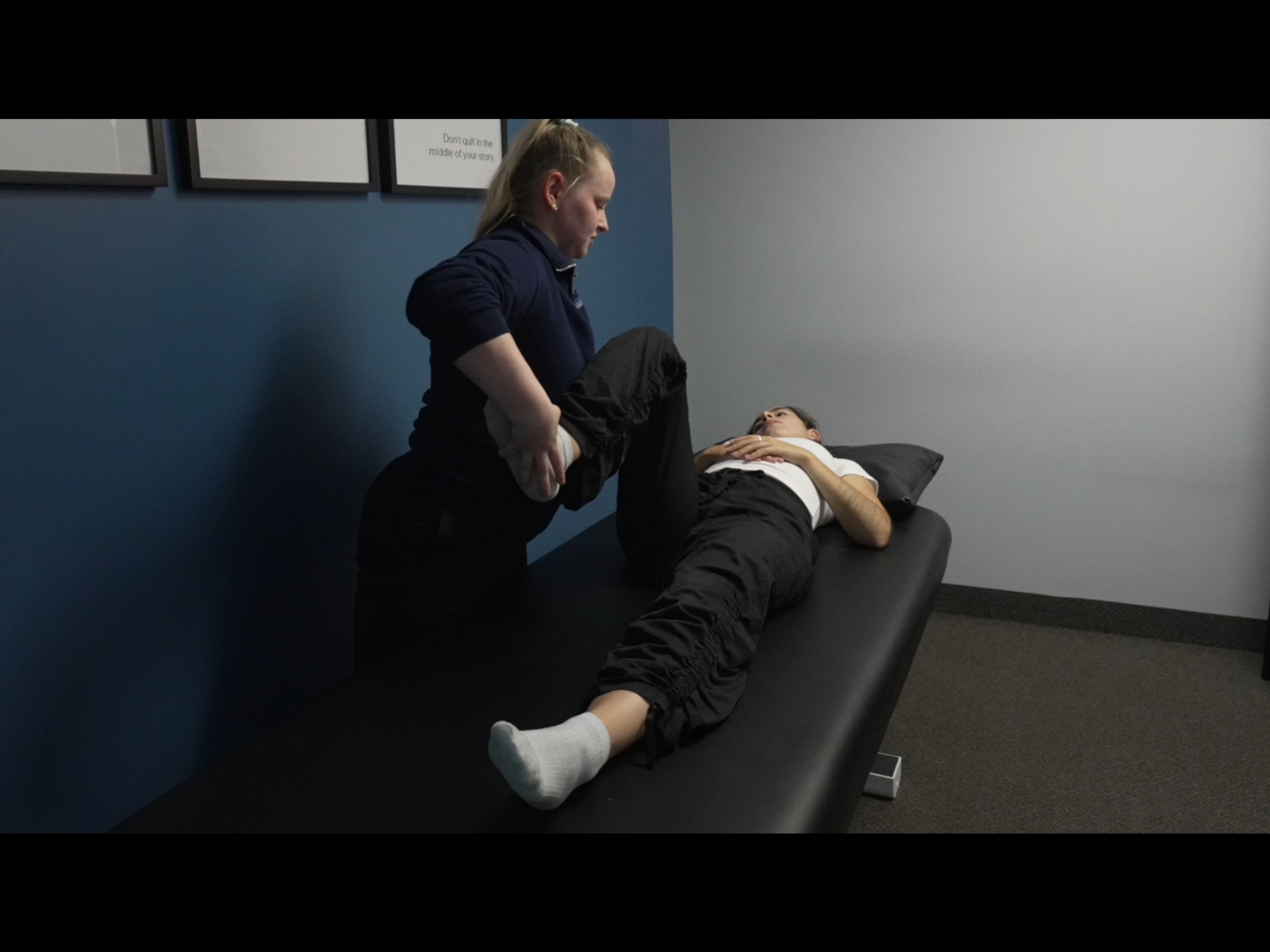
Osteopathic care begins with an assessment.
Before treatment, your practitioner will want to understand what your headaches feel like, how frequently they occur, what makes them better or worse, and whether you experience other symptoms alongside them.
Your osteopathic assessment may look at areas including your:
- Neck
- Upper back
- Shoulders
- Rib cage
- Jaw when relevant
- Surrounding muscles and connective tissues
- Neck range of motion
- Upper-body movement
- Breathing mechanics
- Daily movement habits
Your practitioner may also ask about factors such as your work environment, exercise habits, sleep, stress, previous injuries, and how much time you spend sitting or using a computer.
The objective is not simply to find something that feels “tight.”
It is to understand your symptoms within the context of how you move and what your body is being asked to do each day.
What Does Osteopathic Treatment for Neck Pain Involve?
Treatment is individualized based on what is found during your assessment.
Osteopathic treatment may use gentle hands-on techniques intended to help improve comfortable movement and reduce sensitivity or tension in certain areas.
Treatment may involve the:
- Neck
- Upper back
- Shoulders
- Rib cage
- Muscles around the shoulder blades
- Tissues around the base of the skull
Not everyone requires treatment in the exact same areas.
Someone whose symptoms are strongly associated with neck stiffness may need a different approach from someone whose headaches occur primarily after long periods of desk work or stress.
The goal is not simply to “release tight muscles.”
A good treatment plan should also consider why those areas may be feeling sensitive or overloaded in the first place.
Are Tight Neck Muscles Causing Your Headaches?
Possibly — but the answer is often more complicated than that.
People with headaches frequently describe tight muscles around the neck and shoulders.
However, muscle tension can sometimes be a response to discomfort rather than the sole cause of it.
Stress, fatigue, prolonged sitting, changes in sleep, exercise load, physical activity, and even how much time you spend concentrating on a screen can influence how the neck and shoulders feel.
This is why simply stretching the same muscles repeatedly does not always solve the problem.
Your treatment plan may also need to address:
- Neck mobility
- Upper-back movement
- Strength
- Endurance
- Movement habits
- Exercise
- Recovery
- Stress
- Sleep
- Workstation setup
Looking at the bigger picture can be much more useful than simply asking, “Which muscle is tight?”
What About “Tech Neck”?
The term tech neck has become popular for describing neck discomfort associated with phones, computers, and other devices.
Looking down at your phone is not automatically damaging your neck.
Your neck is designed to bend.
The bigger issue may be spending a long period in any single position without moving.
If you spend hours working at a computer and then another few hours looking at your phone, your neck may simply be getting less movement variety than it would prefer.
Rather than being afraid of looking down, a more practical strategy is to move regularly and change positions throughout your day.
Does Bad Posture Cause Headaches?
Posture is often blamed for headaches and neck pain, but the relationship is not that simple.
There is no single perfect posture that guarantees you will never experience neck pain or headaches.
People naturally sit, stand, lean, slouch, straighten up, and move throughout the day.
All of those positions can be normal.
The issue is often less about how you sit and more about how long you stay there.
If you sit at a desk for several hours without moving, your neck and upper back may begin to feel stiff regardless of whether your posture looks “good” or “bad.”
Instead of constantly trying to force yourself into one ideal position, focus on movement variety.
Sometimes the best posture really is your next posture.
Simple Ways to Reduce Neck Stiffness During Your Workday
You don’t necessarily need a complicated ergonomic setup or a long stretching routine.
Small changes throughout your day can make a meaningful difference.
Try to:
- Stand up periodically
- Walk for a few minutes between tasks
- Change your sitting position
- Look away from your screen regularly
- Gently move your neck in different directions
- Roll or move your shoulders
- Alternate between sitting and standing when possible
- Take short movement breaks
- Stay physically active outside of work
The goal is not to constantly correct your posture.
It is to avoid spending your entire day in the exact same position.
Why Upper-Back Mobility Matters for Neck Movement
Your neck does not work alone.
Your upper back contributes to many movements involving your head, shoulders, and arms.
If the upper back is moving less than usual, your neck may need to contribute more motion during certain activities.
This is why an osteopathic assessment for neck pain may include examining the thoracic spine, or upper back.
Improving movement through the upper back may sometimes make everyday movements such as turning your head, reaching overhead, or sitting at a desk feel more comfortable.
What About the Shoulders and Rib Cage?
The shoulders, rib cage, and neck are closely related during movement.
Muscles connecting these areas help support and move the head, neck, shoulders, and upper body.
Your rib cage also moves every time you breathe.
Because of this, an osteopathic assessment may sometimes look at shoulder mobility, rib movement, and breathing mechanics alongside the neck.
Again, this does not mean that a “misaligned rib” or shoulder is necessarily causing your headache.
It simply gives your practitioner a broader understanding of how your upper body is moving.
Stress, Headaches, and Neck Tension
Many people notice that their headaches or neck tension become worse during stressful periods.
That makes sense.
Stress can influence muscle tension, sleep quality, physical activity, breathing, and pain sensitivity.
You may notice yourself shrugging your shoulders, clenching your jaw, sitting at your computer for longer periods, or sleeping poorly during stressful weeks.
Addressing the physical side of your symptoms can be useful, but it may also help to recognize the role that stress, sleep, and recovery can play.
Treatment should consider the person — not just the painful area.
What Can You Do Between Osteopathy Treatments?
Hands-on treatment should not be the only thing helping you feel better.
Depending on your assessment, your osteopathic practitioner may recommend exercises or strategies that you can use between appointments.
These might include:
- Gentle neck mobility exercises
- Upper-back mobility
- Shoulder exercises
- Strengthening
- Breathing exercises
- Movement breaks
- Gradual return to exercise
- Changes to your workstation
- Stress-management strategies
The objective is to give you tools you can use on your own.
Ideally, your treatment should help you become less dependent on treatment, not more dependent on it.
Exercise Can Be an Important Part of Neck Pain Treatment
When your neck hurts, it can be tempting to avoid moving it.
But in many cases, gradually restoring comfortable movement and strength can be an important part of recovery.
Your neck contains muscles that need strength and endurance just like any other part of your body.
Depending on your symptoms, exercise may focus on the muscles of the:
- Neck
- Shoulders
- Upper back
- Shoulder blades
- Trunk
The right exercises depend on the individual.
Someone who spends eight hours working at a desk may have very different needs from someone experiencing neck discomfort while lifting weights or playing sports.
Headaches and Jaw Tension
Some people who experience headaches also report jaw tension, clenching, or discomfort around the face and temples.
The jaw, neck, and surrounding muscles are closely situated and can sometimes influence one another.
If you regularly clench your jaw or notice jaw discomfort alongside headaches, mention this during your assessment.
It may be another useful piece of information when understanding your symptoms.
When Should a Headache Be Medically Assessed?
Most headaches are not caused by a serious medical problem.
However, headaches should not automatically be treated as a musculoskeletal issue.
Seek medical attention if you experience a headache that is:
- Sudden and extremely severe
- Significantly different from your usual headaches
- Associated with weakness, numbness, confusion, or difficulty speaking
- Associated with fainting or loss of consciousness
- Accompanied by significant vision changes
- Associated with fever and severe neck stiffness
- Occurring after a significant head or neck injury
- Progressively becoming more frequent or severe without explanation
You should also speak with a healthcare professional if you experience new or persistent headaches and are unsure of the cause.
Appropriate screening is an important part of responsible headache care.
Can Osteopathy Help with Chronic Neck Pain?
People sometimes seek osteopathy after dealing with recurring neck stiffness or discomfort for months or even years.
With persistent pain, there is not always one single structure that needs to be “fixed.”
Long-standing neck pain can involve a combination of factors including mobility, strength, physical activity, work demands, stress, sleep, previous injuries, and sensitivity of the nervous system.
This is why chronic neck pain often benefits from a broader approach.
Hands-on osteopathic treatment may help with comfort and movement, while exercise and lifestyle strategies can help build your body’s capacity over time.
Osteopathy for Headaches and Neck Pain in Hamilton
If you’re searching for osteopathy for headaches or neck pain in Hamilton, your treatment should involve more than simply rubbing the area that feels tight.
At Restorative Touch Physiotherapy, our approach considers how your neck, shoulders, upper back, rib cage, daily activities, and movement habits may be interacting.
We want to understand:
- What your headaches feel like
- When they occur
- What movements are uncomfortable
- What activities aggravate them
- How your neck is moving
- What your work or daily routine looks like
- What you want to get back to doing
From there, treatment can be tailored to your individual needs.
Helping You Get Back to the Things That Matter
Headaches and neck pain can affect much more than your neck.
They can interfere with your workday, workouts, sleep, concentration, driving, hobbies, and time with family and friends.
The goal of treatment is not perfect posture.
It is not eliminating every tight muscle.
And it is not trying to keep your spine in one ideal position.
The goal is to help you feel more comfortable, restore movement where needed, build confidence in your body, and give you practical strategies that can help you manage your symptoms.
Whether your goal is to work at your computer without constantly thinking about your neck, return to the gym, sleep more comfortably, drive without stiffness, or simply experience fewer headache days, your treatment should be built around what matters to you.
If you’re experiencing headaches with neck pain, recurring neck stiffness, or reduced neck mobility and are looking for osteopathy in Hamilton or Hamilton Mountain, an osteopathic assessment may help you better understand what is contributing to your symptoms and what you can do about it.