
There’s something interesting about strength that we don’t talk about enough.
Most people picture strength as heavy deadlifts, marathon runners, or elite athletes pushing their bodies to the limit. And yes, those things absolutely require strength. But some of the strongest people you will ever meet may never step foot into a gym.
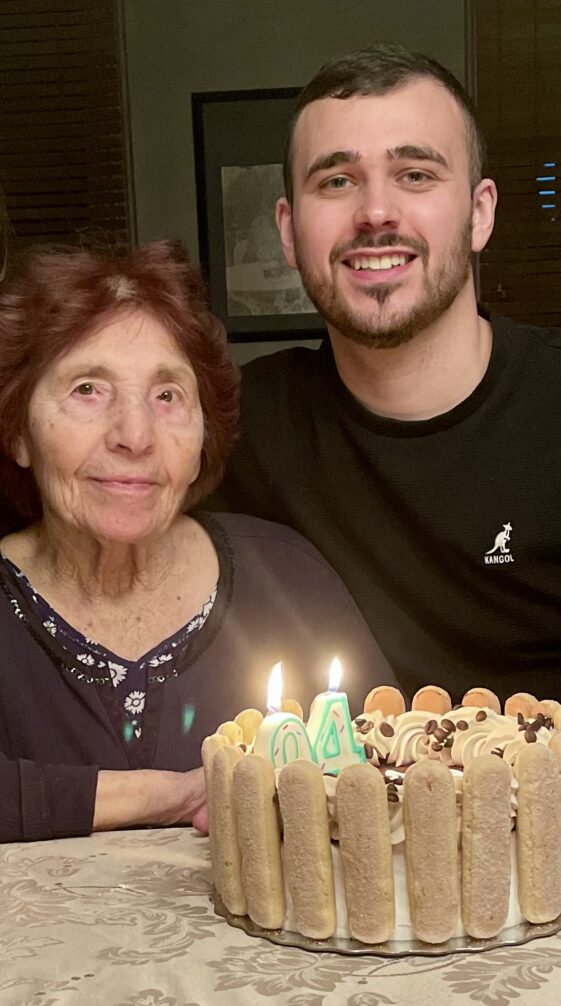
My nonna is one of them.
Picture this: a young, ambitious woman in rural Calabria carrying a 5 kg basket over her head while walking up and down mountain ranges for over 20 kilometres a day. Day after day. Long before fitness trackers, structured workouts, or strength programs, life itself demanded resilience.
Now, at 97 years old, she still lives independently and instead of climbing mountains, she climbs the 13 steps in her two-story home.
Same woman. Same stubbornness. Different challenges.
Every single day she climbs stairs, cooks meals, cleans up after herself, and carries on with a level of determination that would exhaust people half her age. She is stubborn — unbelievably stubborn — but that stubbornness has become one of her greatest strengths.
She refuses to let age decide what she can or cannot do.
That’s the kind of strength that fascinates me most.
Not strength as performance.
Strength as freedom.
The freedom to continue living life on your own terms.
As healthcare providers, we often focus on pain reduction or injury recovery, but underneath all of that is a much deeper goal: helping people maintain independence. Helping someone squat again isn’t just about exercise technique. It may mean they can get off the toilet without assistance. Improving balance may help prevent a devastating fall. Building leg strength may allow someone to continue living in the home they love instead of being forced to leave it.
Strength protects dignity.
My nonna probably never thinks of herself as “training for longevity.” But in many ways, she has been doing exactly that her entire life. Years of movement, routine, resilience, and determination built a foundation that continues to carry her through nearly a century of life.
And honestly, stubbornness gets a bad reputation.
Sometimes stubbornness is simply refusing to surrender to limitation.
It’s deciding that you are still capable.
Still useful.
Still independent.
Still living.
We live in a culture that often accepts physical decline as inevitable. People joke about aging as if weakness is simply part of the contract. But the human body is incredibly adaptable. We can build strength at almost any age. Research consistently shows that resistance training improves mobility, balance, bone density, cognitive health, and overall quality of life — even in older adults.
The goal is not necessarily to become the strongest person in the room.
The goal is to remain capable.
Capable of carrying groceries.
Capable of climbing stairs.
Capable of getting down onto the floor with your grandkids and standing back up again.
Capable of continuing to live your life without constantly relying on someone else.
That kind of strength changes everything.
What stands out to me most about my nonna isn’t her age. It’s how fiercely she holds onto her independence. There is pride in it. Purpose in it. And whether she realizes it or not, every staircase she climbs is a reminder that strength is earned little by little over a lifetime.
Strength is not only built in the gym.
Sometimes it’s built in everyday decisions.
In consistency.
In resilience.
In refusing to quit.
And sometimes, at least in my nonna’s case, it’s built through a little bit of stubbornness.
At Restorative Touch Physiotherapy, our goal isn’t just to help people recover from injury — it’s to help them stay strong enough to continue doing the things that matter most to them. Whether that means returning to sport, keeping up with your kids, or maintaining your independence as you age, strength matters.
Because strength is more than muscle.
It’s freedom.