
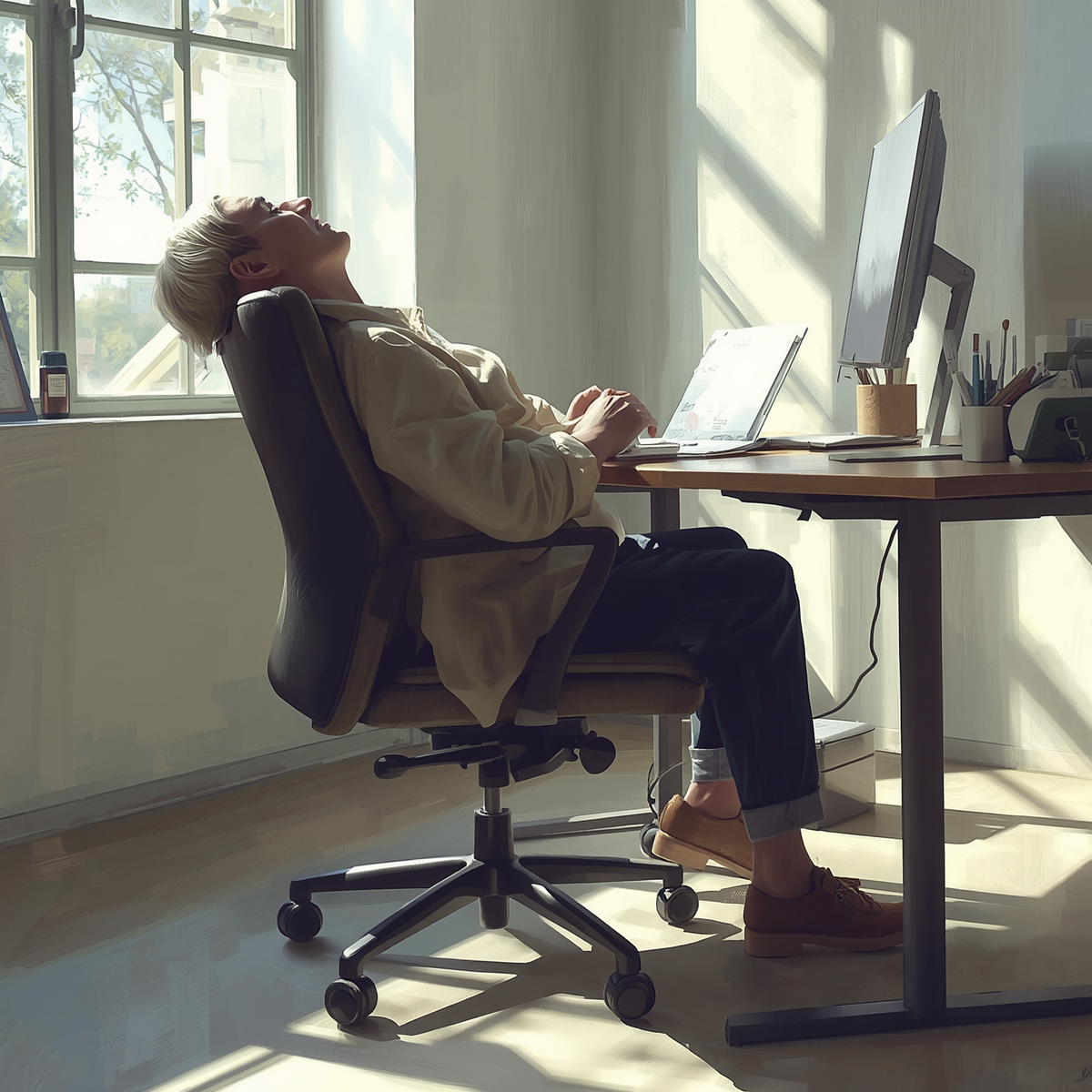
Want better posture? Learn how physiotherapy, therapeutic exercise and the Restore You program can improve strength, mobility and movement in Hamilton.
Do you catch yourself slouching at your desk?
Maybe your shoulders round forward when you’re sitting. Maybe your head seems to drift toward your computer screen. Or perhaps you’ve noticed that your lower back aches after sitting for several hours.
You may have even been told that you have “bad posture.”
But here’s something important to understand:
Posture isn’t simply about sitting or standing perfectly.
Your body isn’t designed to stay frozen in one position all day.
Good posture is better understood as your ability to move comfortably, maintain positions when needed, and tolerate the physical demands of your day.
That’s why posture correction shouldn’t simply mean being told to “sit up straight.”
At Restorative Touch Physiotherapy in Hamilton, we look at posture as part of a bigger picture that includes strength, mobility, movement habits, physical capacity, work demands, and lifestyle.
And that’s where therapeutic exercise — including our Restore You program — can play an important role.
What Is Good Posture?
Posture is the position of your body while you’re sitting, standing, walking, working, exercising, or performing other activities.
There isn’t one perfect posture that everyone should maintain.
Your ideal posture will change depending on what you’re doing.
Think about an athlete.
They may spend part of a soccer game running upright, then suddenly sprint forward, rotate, bend, jump, and change direction.
Those are all different positions.
None of them are necessarily “bad posture.”
The same principle applies to everyday life.
The best posture is often the posture you don’t stay stuck in for too long.
Movement matters.
Can Bad Posture Cause Pain?
This is where posture gets a little more complicated.
It’s common to hear:
“Your posture is causing your back pain.”
Or:
“Your rounded shoulders are causing your neck pain.”
But pain is rarely that simple.
Two people can have almost identical posture and completely different symptoms.
One may have significant pain.
The other may have none.
Pain can be influenced by many factors, including:
- Physical activity
- Strength
- Sleep
- Stress
- Previous injuries
- Work demands
- Recovery
- Physical capacity
- Movement habits
- Sensitivity of the nervous system
So rather than blaming one posture for your pain, it’s more useful to ask:
“What does my body need to tolerate the positions and activities I regularly perform?”
That’s the question we want to answer through rehabilitation.
Why Do We Develop Poor Posture?
There isn’t usually one single cause.
Your posture can be influenced by:
- Your work environment
- How much time you spend sitting
- Phone use
- Driving
- Strength
- Mobility
- Habit
- Fatigue
- Stress
- Previous injuries
- Activity levels
For example, someone who spends eight hours at a computer may naturally spend a lot of time with their hips and knees bent and their arms positioned in front of them.
That’s not inherently harmful.
The bigger issue may be that they spend eight hours in a similar position without enough movement or physical variety.
The Problem With “Perfect Posture”
One of the biggest misconceptions about posture correction is that there’s one perfect position you should maintain all day.
There isn’t.
Imagine trying to hold the exact same posture for eight hours.
Your muscles would fatigue.
Your joints would become uncomfortable.
You’d probably become more aware of every little sensation in your body.
Instead of trying to maintain one perfect position, a better strategy is to develop the ability to change positions frequently and tolerate different postures comfortably.
That means:
Sit. Stand. Walk. Stretch. Move. Work. Rest. Repeat.
Posture and Your Desk Job
Desk workers are often told that their workstation is causing their pain.
Sometimes their workstation can certainly contribute to discomfort.
But your desk doesn’t need to be perfect.
A practical workstation should allow you to:
- See your screen comfortably
- Use your keyboard without excessive reaching
- Keep your shoulders relatively relaxed
- Position your feet comfortably
- Change positions throughout the day
The most important ergonomic adjustment may actually be:
Don’t stay there all day.
Take movement breaks.
Stand up.
Walk around.
Change your sitting position.
Move your shoulders.
Get some water.
Your body generally responds well to movement.
How Your Phone Can Affect Posture
Phones have become one of the biggest sources of prolonged screen time.
You may find yourself:
- Looking down at your phone
- Holding your arms forward
- Sitting for long periods
- Keeping your neck in one position
Again, looking down isn’t inherently harmful.
Your neck is designed to move.
The problem can arise when you’re spending significant amounts of time in the same position without enough variation.
Rather than never looking down at your phone, try changing positions and taking regular breaks.
Can Exercises Improve Posture?
Yes — but not because exercises magically “pull you into place.”
Exercise can help improve your:
- Strength
- Mobility
- Endurance
- Coordination
- Movement control
- Physical capacity
For example, strengthening your upper back may make certain upright positions easier to maintain.
Improving hip mobility may make different sitting or standing positions more comfortable.
Building core and lower-body strength may improve your ability to tolerate prolonged activity.
The goal isn’t to force your skeleton into a perfect position.
The goal is to make your body more capable.
Exercises for Better Posture
A posture-focused exercise program should be individualized, but several types of exercises are commonly useful.
1. Thoracic Extension
Sit or stand comfortably.
Place your hands behind your head.
Gently extend your upper back while keeping the movement controlled.
Return to your starting position.
Repeat several times.
The goal is simply to move your upper back through a range of motion — not to force yourself into an extreme position.
2. Chin Tucks
Sit or stand tall.
Gently draw your chin backward, as though you’re making a subtle double chin.
Hold briefly.
Relax.
Repeat for several repetitions.
This exercise can help you practice controlled neck positioning.
It should not feel like you’re forcing your head backward.
3. Rowing Exercises
Rows strengthen muscles around the upper back and shoulder.
You can perform them using:
- Resistance bands
- Cables
- Dumbbells
- Gym machines
Focus on controlled movement rather than simply pulling as hard as possible.
4. Wall Angels
Stand with your back against a wall.
Depending on your mobility, position your arms against or near the wall.
Slowly move your arms upward and downward.
Don’t force your arms into a position your body can’t comfortably reach.
The exercise should challenge your movement, not create pain.
5. Core Strengthening
Your core doesn’t need to be rigid all day.
Instead, core training can help you develop the ability to control your trunk while moving.
Exercises might include:
- Dead bugs
- Planks
- Side planks
- Carries
- Bird dogs
The appropriate exercise depends on your current ability and goals.
6. Hip Strengthening
Strong hips can help you tolerate everyday activities such as:
- Walking
- Climbing stairs
- Squatting
- Lifting
- Running
Exercises may include:
- Squats
- Split squats
- Bridges
- Step-ups
- Hip hinges
Again, the goal isn’t simply “better posture.”
It’s building a stronger, more capable body.
How Often Should You Do Posture Exercises?
There’s no magic number.
Consistency matters more than performing a huge workout once a week.
A short program performed regularly can be more useful than an overwhelming routine that you abandon after five days.
Your physiotherapist can help determine:
- Which exercises you need
- How many repetitions
- How often to perform them
- How much resistance to use
- When to progress
As your body adapts, your program should change.
Posture Correction Isn’t Just About Stretching
If you’ve been dealing with poor posture, you may have been told to stretch your chest or neck.
Mobility work can certainly have a role.
But posture rehabilitation shouldn’t consist entirely of stretching.
You may also need:
Mobility + Strength + Endurance + Movement Variety + Education
That’s a much more complete approach.
What About Rounded Shoulders?
Rounded shoulders are extremely common.
But having shoulders that sit forward doesn’t automatically mean something is wrong.
The important questions are:
- Can your shoulders move normally?
- Are you experiencing pain?
- Can you perform your daily activities?
- Do you have sufficient strength?
- Can you comfortably change positions?
If your shoulders are rounded but you have no symptoms and excellent function, you may not need to “correct” them.
If you have pain or limited function, however, an assessment can help determine what factors may be contributing.
What About Forward Head Posture?
Forward head posture refers to a position where the head sits relatively forward compared with the trunk.
It is common among people who spend significant time using computers and phones.
But again, posture isn’t automatically pathology.
Your neck is designed to move through many positions.
The goal isn’t to spend your entire day forcing your head into a rigid “perfect” position.
Instead, you can work on:
- Neck mobility
- Upper-back mobility
- Neck strength
- Upper-back strength
- Movement variety
- Ergonomics
- General physical conditioning
Posture and Lower Back Pain
Lower back pain is one of the most common reasons people seek physiotherapy.
It’s also one of the conditions most frequently blamed on posture.
But there isn’t one universal “bad posture” responsible for lower back pain.
Instead, we need to consider the entire picture.
For example:
How much are you sitting?
How active are you?
How strong are you?
How much lifting do you do?
How well are you sleeping?
Have you recently changed your activity level?
What does your work require?
These questions can often be more useful than simply looking at whether your lower back appears straight.
Posture and Workplace Injuries
Poor workplace setup isn’t always the main issue.
Sometimes the bigger problem is that your body isn’t prepared for the demands you’re placing on it.
For an office worker, that may mean prolonged sitting.
For a tradesperson, it may mean lifting, bending, kneeling, or working overhead.
For a healthcare worker, it may involve repetitive lifting and awkward positions.
For a driver, it may mean prolonged sitting and vibration.
The solution should reflect the person’s actual job.
This is why individualized physiotherapy can be more useful than a generic “perfect posture” checklist.
How Physiotherapy Can Help With Posture
A physiotherapist can assess how you move rather than simply looking at how you stand.
Your assessment may include:
- Posture
- Mobility
- Strength
- Movement patterns
- Joint function
- Work demands
- Activity levels
- Pain
- Previous injuries
- Physical capacity
From there, your treatment may include:
- Therapeutic exercise
- Strength training
- Mobility exercises
- Ergonomic education
- Movement retraining
- Activity modification
- Manual therapy when appropriate
The goal isn’t simply to make you look straighter.
It’s to help you move better and tolerate more.
If you like the approach of physiotherapy on posture, click here.
How Athletic Therapy Can Help With Posture
Athletic therapy takes a similar capacity-based approach.
Athletes need to be able to move through a wide variety of positions.
They need strength, mobility, coordination, balance, and endurance.
Posture isn’t about holding one position.
It’s about having the physical capacity to control your body while moving.
Athletic therapy can therefore be particularly useful for people who want to improve movement quality while returning to sport or physical activity.
If you’re interested in learning more about Athletic Therapy, click here.
Restore You: A Different Approach to Posture Correction
This is where our Restore You program fits particularly well.
Restore You isn’t about giving you a list of “posture correction exercises” and sending you home.
It’s about looking at the bigger picture.
What does your body currently allow you to do?
What would you like to be able to do?
What’s currently getting in the way?
Then we build a progressive plan to close that gap.
That may involve:
- Strength training
- Mobility
- Therapeutic exercise
- Movement retraining
- Conditioning
- Education
- Functional training
- Lifestyle strategies
The goal isn’t simply to change how you look while sitting.
It’s to improve how your body functions.
Restore Your Posture by Restoring Your Capacity
Think about someone who sits at a desk all day.
They may believe they need to constantly remind themselves:
“Sit up straight.”
But what if the better solution is to make their body more capable of handling the demands of their work?
That could mean improving:
- Upper-back strength
- Neck endurance
- Core strength
- Hip strength
- General conditioning
- Mobility
And it could mean changing positions more frequently throughout the day.
Instead of constantly fighting your posture, you build a body that can handle your lifestyle.
That’s a much more sustainable approach. If you would like to learn more about restore you, click here.
How Long Does It Take to Improve Posture?
There isn’t a universal timeline.
Your progress depends on:
- Your starting point
- Your symptoms
- Your strength
- Your mobility
- Your consistency
- Your work demands
- Your goals
You may notice changes in how comfortable you feel within weeks.
More significant improvements in strength and physical capacity can take longer.
The important thing is to focus on function rather than appearance alone.
Can you sit longer comfortably?
Can you work without symptoms?
Can you exercise?
Can you lift?
Can you move confidently?
Those are meaningful measures of progress.
Do You Need to Fix Your Posture?
Maybe.
But perhaps a better question is:
“What would I like my body to be able to do more comfortably?”
If you’re pain-free and functioning well, you may not need to dramatically change your posture.
If you’re experiencing pain, stiffness, weakness, or difficulty tolerating certain activities, however, posture may be one part of the bigger picture worth assessing.
Frequently Asked Questions About Posture Correction
What is the best posture?
There isn’t one perfect posture. A healthy approach is to be able to move between different positions comfortably and avoid staying in one position for prolonged periods.
Can physiotherapy fix bad posture?
Physiotherapy can help address factors that may influence posture, including strength, mobility, movement control, and physical capacity. The goal is generally improved function rather than forcing your body into one perfect position.
What are the best exercises for posture?
Exercises targeting strength, mobility, endurance, and movement control can all contribute to better postural capacity. The right exercises depend on your individual needs.
Can poor posture cause neck pain?
Posture can be one contributing factor to neck discomfort, but neck pain usually has multiple potential contributors. An assessment can help determine what’s relevant in your case.
Can poor posture cause back pain?
Poor posture isn’t necessarily the sole cause of back pain. Work demands, activity levels, strength, sleep, previous injuries, stress, and many other factors can contribute.
How often should I do posture exercises?
Consistency is more important than a specific number. Your physiotherapist can recommend an appropriate frequency based on your goals and current abilities.
Does sitting up straight improve posture?
It can help you practice a different position, but constantly forcing yourself to sit upright isn’t necessarily the solution. Changing positions and building physical capacity are generally more sustainable.
Can posture be permanently corrected?
Your posture naturally changes throughout the day and across different activities. Rather than trying to permanently hold one position, the goal is to develop the strength, mobility, and control to move comfortably through many positions.
Does working at a desk cause bad posture?
Desk work can involve prolonged periods of sitting and screen use, which may contribute to discomfort for some people. Regular movement and an appropriately adjusted workstation can help.
Can Restore You help with posture?
Yes. Restore You uses progressive therapeutic exercise and individualized rehabilitation strategies to help improve strength, mobility, movement, physical capacity, and confidence. These factors can all contribute to better postural function.
Posture Correction in Hamilton
If you’ve been told you have “bad posture,” you don’t necessarily need to spend the rest of your life forcing yourself to sit up straight.
Your body is designed to move.
The goal is to build a body that is strong enough, mobile enough, and capable enough to handle the positions and activities your life demands.
At Restorative Touch Physiotherapy in Hamilton, therapeutic exercise is at the foundation of our approach.
Through physiotherapy, athletic therapy, and our Restore You program, we help people improve strength, mobility, movement, and physical capacity so they can do more with confidence.
Whether you’re dealing with neck pain from desk work, back discomfort from prolonged sitting, or simply want to improve how you move, we can help you understand what’s actually contributing to your symptoms and create a plan around your goals.
Don’t spend your day fighting your posture. Build a body that can handle your life.
Contact Restorative Touch Physiotherapy on Hamilton Mountain to book an assessment and start your Restore You journey.