
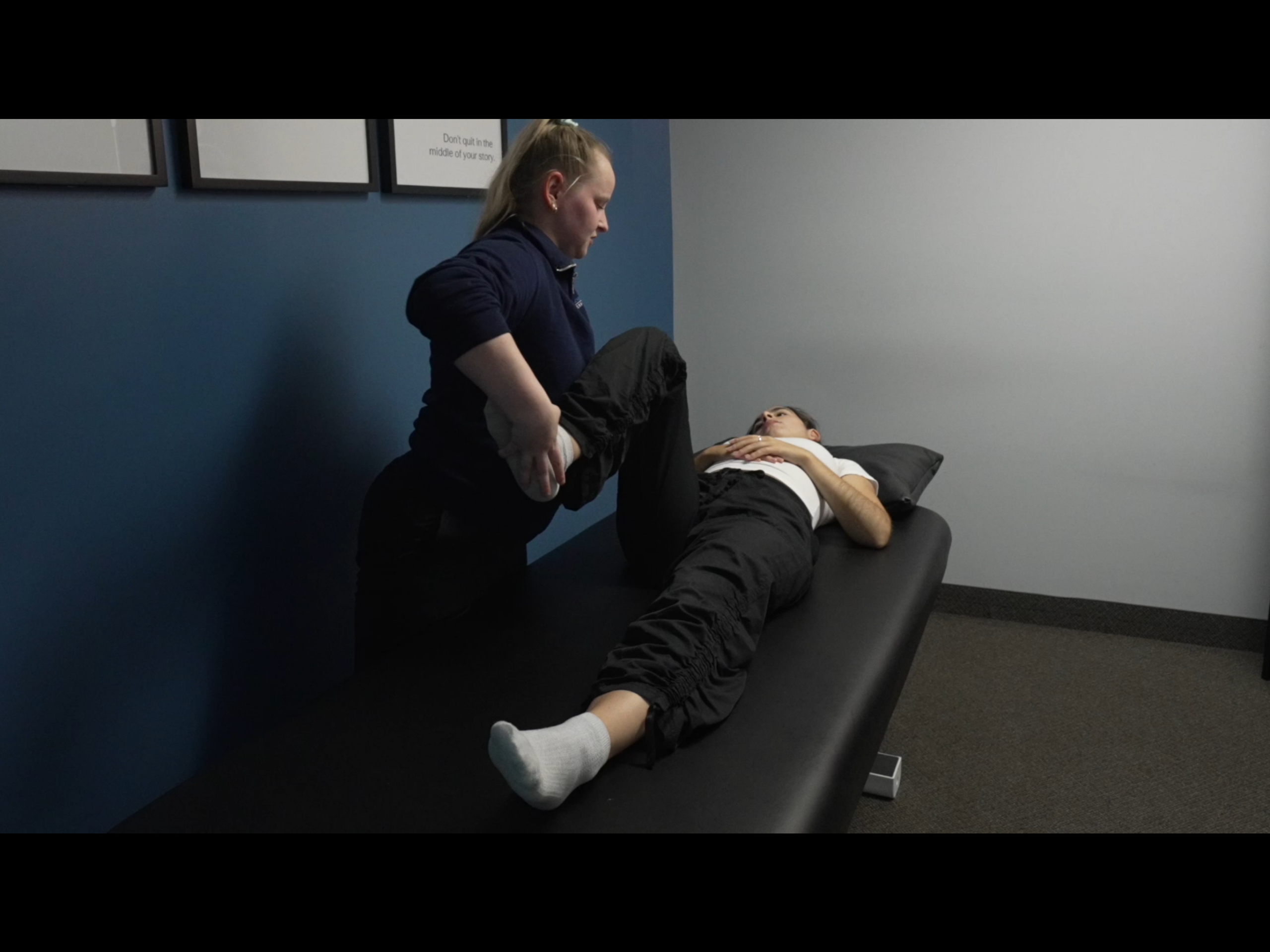

Pelvic Health Physiotherapy
Pelvic Health Physiotherapy is a specialized branch of physiotherapy that focuses on the assessment and treatment of various conditions that relate to the pelvis, pelvic floor muscles, and their relationship to the entire body as a whole. Utilizing techniques such as manual therapy, education, exercises and lifestyle modification tailored specifically to each patient’s needs and pelvic dysfunction.
At Restorative Touch Physiotherapy, we provide individualized Pelvic Health Physiotherapy in Hamilton in a private and supportive clinical environment. Our pelvic health physiotherapists assess and treat conditions affecting the pelvic floor muscles, pelvis, hips, abdominal wall, bladder and bowel function, and surrounding musculoskeletal system.
Whether you’re experiencing urinary leakage, pelvic pain, pain with intercourse, pelvic pressure, pregnancy-related discomfort, postpartum symptoms, or difficulty returning to exercise, your treatment begins with understanding what you’re experiencing and what you want to get back to doing.
Our clinic is conveniently located on Hamilton Mountain near Upper Ottawa Street and Fennell Avenue East.
Pelvic Health Physiotherapy is available to all individuals and can help with the following conditions:
- Chronic low back, hip, and pelvic girdle pain
- Urinary and fecal incontinence
- Urinary urgency, frequency, hesitancy, or leakage
- Painful insertion (intercourse, tampons, etc.)
- Peri-natal population
- Erectile dysfunction
- & more!
Physiotherapists who have been trained to treat dysfunction of the pelvic region have completed a thorough and college-approved training program that allows for both external and internal examination of the pelvic region. Each assessment and treatment program is tailored to the comfort level of the individual and an internal examination is not required to proceed with effective pelvic health physiotherapy. Each assessment will include:
- A thorough subjective assessment to better understand you and your concerns and goals including past medical history, current symptoms, and surgical history.
- External assessment exploring movement patterns, muscle tension or tenderness, scar tissue mobility, and more.
- OPTIONAL: Internal assessment (vaginally and/or rectally) to assess pelvic floor muscle tenderness, tone, strength as well as to assess for the presence of prolapse.
Learn more about how Pelvic Health Physiotherapy can improve your urinary incontinence.
Pregnancy Physiotherapy in Hamilton
Pregnancy doesn’t mean you automatically need to stop exercising or accept pain as inevitable. Your body is adapting to increasing physical demands throughout pregnancy. Changes in your centre of gravity, abdominal wall, pelvic floor, joint loading, strength and movement patterns can contribute to discomfort or difficulty with activities that previously felt easy. Our pelvic health physiotherapists can help you modify exercise and daily activities while addressing symptoms such as back pain, pelvic pain, urinary leakage or pelvic pressure.
Your treatment may incorporate:
● Pelvic floor exercises ● Strengthening ● Mobility work
● Breathing and pressure-management strategies ● Exercise modification ● Manual therapy
● Hip and pelvic rehabilitation ● Education ● Preparation for postpartum recovery
Treatment should always be individualized to your pregnancy, symptoms, activity level and medical recommendations.
Pregnancy-Related Pelvic Health Concerns
Pregnancy creates significant changes throughout the pelvic floor, abdominal wall, hips, pelvis, and lower back.
Pelvic health physiotherapy during pregnancy may help address:
- Pelvic girdle pain
- Pubic symphysis pain
- Lower back pain
- Hip pain
- Urinary leakage
- Pelvic pressure or heaviness
- Pelvic floor dysfunction
- Constipation
- Difficulty exercising
- Changes in abdominal and pelvic floor coordination
Treatment may also include education around movement, exercise modification, breathing, pelvic floor relaxation and preparation for postpartum recovery.
Postpartum Pelvic Floor Physiotherapy
Pregnancy and childbirth can place significant demands on the pelvic floor and abdominal wall.
After delivery, you may experience:
- Urinary leakage
- Pelvic pressure or heaviness
- Pelvic pain
- Pain with intercourse
- Abdominal weakness
- Difficulty returning to exercise
- Scar sensitivity
- Caesarean-section recovery concerns
- Pelvic floor weakness or tension
- Reduced confidence with lifting, running or physical activity
Postpartum physiotherapy can help you gradually rebuild strength, coordination, movement tolerance, and confidence.
The goal isn’t simply to “get your body back.”
It’s to help you build the strength and physical capacity you need for the activities that matter to you now.
Postpartum Physiotherapy Rehab
There isn’t one universal postpartum recovery timeline. Recovery can depend on your pregnancy, type of delivery, complications, symptoms, sleep, previous activity level and what you’re hoping to return to.
Your postpartum rehabilitation may focus on:
● Pelvic floor recovery ● Abdominal and core rehabilitation ● Diastasis recti concerns
● Pelvic girdle pain ● Back pain ● Caesarean-section recovery
● Scar mobility ● Urinary leakage ● Pelvic pressure
● Returning to strength training ● Returning to running ● Returning to sport ● Lifting and carrying your baby comfortably
Instead of simply asking, “Has enough time passed?”, we want to look at what your body is currently capable of doing and progressively rebuild from there.
Physiotherapy Services & More!
We here at Restorative Touch offer a wide range of services in Hamilton tailored to your your needs, from Physiotherapy to Acupuncture and Massage Therapy. We have all the services you need to achieve your goals.