
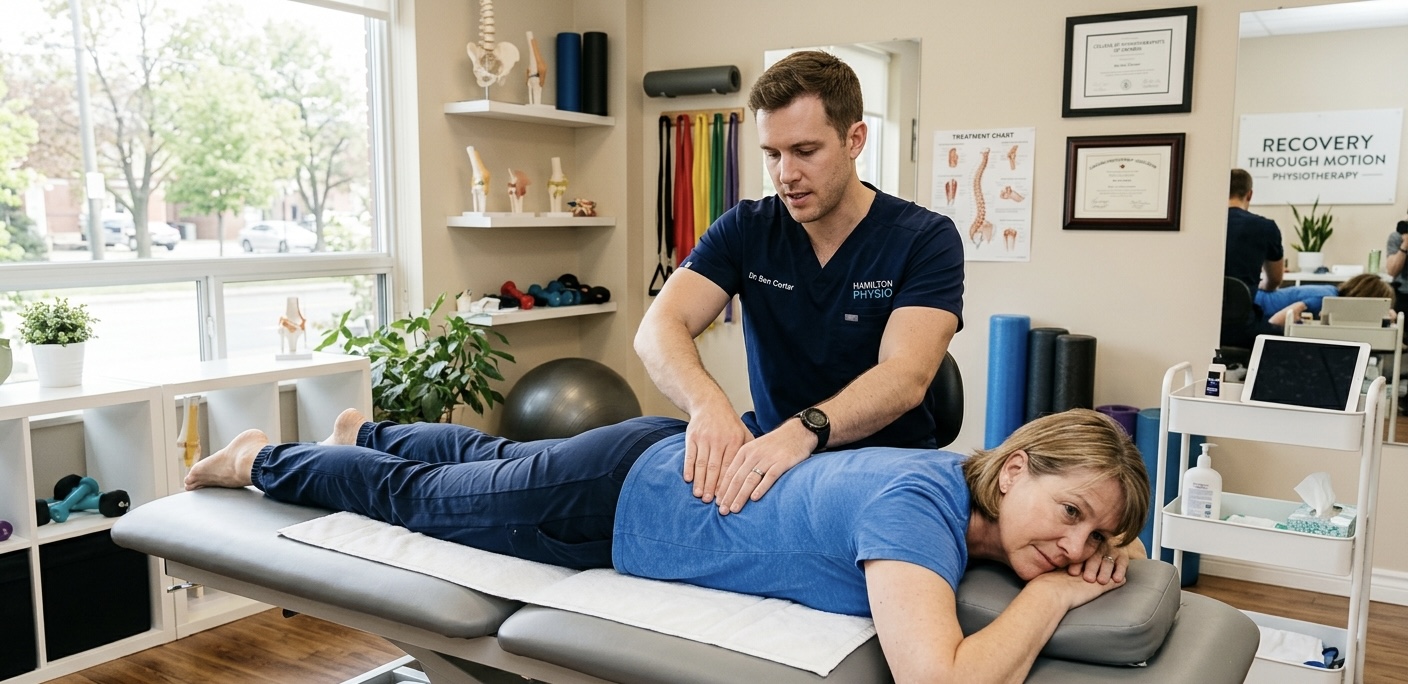
When pain continues for months, the questions often change. Instead of “When will this injury heal?” you may find yourself asking, “Why does this still hurt?”, “Can I trust my body?” or “How am I supposed to stay active?”
Those questions deserve more than “just rest” or “push through it.” For people seeking help with chronic pain syndrome in Hamilton, a useful starting point is understanding what persistent pain means—and what a realistic care plan can offer.
What is chronic pain syndrome?
Chronic pain is pain that persists or repeatedly returns for more than three months. It can follow an injury or accompany another condition, but it can also occur without an identifiable injury or underlying illness. It may affect work, relationships, sleep and everyday activity. Health Canada: Understanding the impact of chronic pain
The phrase “chronic pain syndrome” is often used when discussing persistent pain and its broader effects on a person’s life. It does not, on its own, explain the cause of pain or determine the treatment. Ask your clinician what the term means in your case.
What symptoms can occur alongside chronic pain?
Pain may feel aching, burning, shooting or throbbing. Some people also experience fatigue, sleep difficulties, anxiety or low mood. These effects can become just as disruptive as the pain itself. Cleveland Clinic: Chronic pain
Before an assessment, write down not only where it hurts, but what has become difficult. “I cannot stand long enough to prepare dinner” gives your clinician a concrete problem to work on.
Why does pain continue after an injury has healed?
Persistent pain does not always have a single explanation. Ongoing inflammation, nerve injury and changes in how the nervous system processes sensation can contribute, sometimes together. Increased sensitivity is one possible contributor—not a diagnosis that should be assumed for everyone. Cleveland Clinic: Causes of chronic pain
A useful assessment asks both whether a condition needs treatment and what else may be influencing your symptoms. Simply knowing how long you have been in pain cannot answer either question.
Is chronic pain “all in my head”?
No. Pain is a real personal experience. Biological, psychological and social factors can influence it; that does not mean someone is imagining symptoms or choosing to have them. The International Association for the Study of Pain explicitly emphasizes respecting a person’s report of pain. IASP: Pain definition and terminology
Support for sleep, distress or coping can belong alongside physical care. It should never be offered as a dismissal of your symptoms.
Why do I hurt if my scans are normal?
Pain and visible tissue damage are not interchangeable. A scan answers particular questions about the structures it can show; it does not directly measure your experience of pain. Normal results do not make that experience less legitimate. IASP: Pain and nociception
Ask your provider: What has this test ruled out? What remains uncertain? Would another test change the plan? These questions are more helpful than assuming a normal scan means either “nothing is wrong” or “something must have been missed.”
Can physiotherapy help chronic pain syndrome?
Physiotherapy can form part of a broader management plan, alongside medical care and psychological support when appropriate. There is no single treatment that works for everyone. Cleveland Clinic: Chronic pain management
At an assessment, discuss the activities you want to regain, previous treatments and concerns about movement. Ask for a plan with clear goals, an agreed starting point and a review date. Progress might mean preparing a meal, tolerating a commute or joining a family outing more comfortably—not only changing a pain score.
Should I exercise when movement hurts?
For chronic primary pain, NICE recommends a supervised group exercise programme that considers the person’s needs, preferences and abilities. This is not a blanket instruction to push through every type of pain or an exercise prescription for every underlying condition. NICE: Chronic pain guideline
Discuss which activity is suitable, how much to begin with and what symptoms require a change. A plan should explain how to respond when things do not go as expected. If activity repeatedly leaves you substantially worse, that is information for your clinician—not evidence that you lack motivation.
What is pacing, and how is it different from avoiding activity?
Pacing means organizing activity around a manageable baseline rather than doing everything on a better day and spending the following days recovering. It includes planning breaks and considering mental and emotional demands as well as physical effort. South Tees Hospitals: Pacing and goal setting
For example, someone who finds a full kitchen clean overwhelming might split it into separate tasks, with planned pauses. The goal is a more sustainable routine, not a permanent restriction. Your starting point and any progression should reflect your condition and response.
What should I do during a chronic pain flare-up?
Flare-ups can happen even when you are using helpful strategies. Sometimes there is a recognizable trigger; sometimes there is not. A setback does not mean you have failed. Cambridge University Hospitals: Flare-up management
Create a written plan with your clinician before the next flare. It can identify activities to temporarily adjust, comfortable ways to keep moving, useful rest or relaxation strategies and when to ask for help. Follow medication instructions rather than changing doses yourself. New or distinctly different symptoms should be assessed rather than automatically labelled a flare.
Can chronic pain improve, and how long does treatment take?
Improvement is possible, but there is no universal timeline or guaranteed cure. Treatment often involves finding and addressing contributors while developing a combination of strategies that suits the individual. Cleveland Clinic: Treatment and outlook
Agree on meaningful measures with your care team. Are activities becoming more manageable? Are you recovering from setbacks more confidently? What has not changed? If treatment is not helping, the plan deserves review—not indefinite repetition.
When should I seek medical care instead of assuming it is chronic pain?
Having an established pain condition does not explain every new symptom. Seek emergency assessment for back pain with new bladder or bowel changes, loss of sensation around the genitals or anus, or weakness or numbness in both legs. Back pain accompanied by fever, feeling unwell or rapid worsening also needs urgent medical advice. NHS: Back pain warning signs
These examples are not an exhaustive list. Tell your healthcare provider about a new pattern, unexplained changes or symptoms that concern you.
Where can I get chronic pain physiotherapy in Hamilton?
Restorative Touch Physiotherapy lists chronic pain syndrome among the conditions supported through our physiotherapy services. At our Hamilton Mountain clinic, assessment begins with your history, physical findings and goals.
Whether you want to return to gardening, manage work tasks or feel more confident with everyday movement, explore our physiotherapy and rehabilitation services in Hamilton to learn more about your options.
You do not need to arrive with every answer. Bring your questions, what you have already tried and what you would most like to do more comfortably.
This article provides general education, not an individual diagnosis or treatment plan. Chronic pain has many causes, and appropriate care depends on your symptoms, medical history and assessment.