
First, reaching into a cupboard becomes uncomfortable. Then putting on a coat, washing your hair or reaching behind your back starts to feel unexpectedly difficult. When shoulder pain is followed by a growing loss of movement, frozen shoulder may be one possible explanation.
For people seeking frozen shoulder treatment in Hamilton, the questions are understandable: Should I stretch more? Rest it? Get an injection? And how long will this last?
Understanding the condition helps you make informed decisions without chasing a quick fix or forcing your shoulder beyond what it currently tolerates.
What is frozen shoulder?
Frozen shoulder, also called adhesive capsulitis, involves thickening and tightening of the capsule surrounding the shoulder joint. Pain and restricted movement are the main features. Movement is limited both when you lift your arm yourself and when a clinician gently moves it for you. AAOS: Frozen shoulder
The name describes the stiffness; it does not mean your shoulder is permanently stuck. It also does not mean that every painful or stiff shoulder has this condition.
What are the first signs of frozen shoulder?
Common signs include shoulder pain, disrupted sleep and increasing difficulty moving the arm. Everyday activities may become noticeably harder as stiffness develops. NHS: Frozen shoulder
Notice the pattern rather than relying on a single painful movement. When did the problem begin? Is your reach becoming more limited? What wakes you at night? Bringing those details to an appointment helps your clinician understand how the condition is changing.
What causes frozen shoulder?
Often, there is no clear trigger. It can occur after a period of reduced shoulder movement following injury or surgery. Diabetes and thyroid conditions are associated with a higher risk. AAOS: Causes of frozen shoulder
If your shoulder has become stiff after surgery, follow your surgeon’s movement restrictions until advised otherwise. General frozen shoulder exercises should not override instructions designed to protect healing tissue.
What are the stages of frozen shoulder?
The condition is commonly described in three phases:
● Freezing: Pain increases and movement becomes more restricted.
● Frozen: Stiffness is prominent, even if pain begins to ease.
● Thawing: Movement gradually improves.
These phases describe a general pattern, not an exact calendar. Recovery varies considerably between people. Bexley MSK: Frozen shoulder
Rather than focusing only on the stage name, ask what currently limits you most: pain, stiffness or difficulty completing particular tasks. That discussion helps make treatment goals practical.
How long does frozen shoulder last? Will it go away on its own?
Improvement can take months to years. Although many people recover substantially, full movement is not guaranteed for everyone. A long-term prospective study found that some people retained measurable restriction despite having relatively little functional difficulty later on. Binder and colleagues: Long-term prospective study
This is a reason to set realistic expectations—not to assume nothing can help. Dressing more easily or sleeping more comfortably can matter well before every degree of movement returns. Ask your clinician what changes to track and when the plan should be reassessed.
Is it frozen shoulder or a rotator cuff problem? Do I need an MRI?
A clinical assessment is important because shoulder conditions can overlap. Restriction of both active and passive movement supports a frozen shoulder diagnosis. Imaging may help rule out other problems; an MRI is not routinely required just to identify frozen shoulder. AAOS: Examination and imaging
Avoid diagnosing yourself from a single online test. Ask whether further testing would change your treatment, especially if the symptoms started after an injury or do not fit the expected pattern.
Can physiotherapy help frozen shoulder?
Physiotherapy can help improve shoulder movement through an individualized programme that may include mobility work and strengthening. The treatment plan should reflect how painful and stiff the shoulder is. NHS: Physiotherapy for frozen shoulder
A useful plan also gives you answers you can use between appointments:
● Which activities should I modify temporarily?
● What should I feel during an exercise?
● What response means I should reduce the movement or contact you?
● How will we know whether the plan is helping?
There should be room to adjust treatment. A programme that repeatedly leaves you struggling with daily tasks deserves review, not simply more repetitions.
What exercises are best for frozen shoulder?
Common options include gentle pendulum movements, assisted arm elevation and supported outward rotation. These are examples, not a universal prescription. Range and repetitions should be reduced if exercises increase pain. Bexley MSK: Frozen shoulder exercises
Ask your physiotherapist to choose a manageable starting routine and demonstrate it. A small programme you understand is more useful than collecting dozens of stretches without knowing which ones suit your shoulder.
Your routine may change as movement becomes easier. Do not assume an exercise recommended to someone else is appropriate for you, particularly after surgery or injury.
Should I push through pain or rest my shoulder completely?
Neither extreme is a good default. NHS guidance encourages gentle movement and advises against inventing strenuous exercises that can aggravate symptoms. NHS: Managing frozen shoulder
The goal is not to force the shoulder to move at any cost. Agree with your clinician on an acceptable symptom response and when to modify the programme. If a session consistently disrupts the rest of your day or night, report that rather than treating it as proof the exercise is working.
How can I manage frozen shoulder pain at night?
Night pain can be one of the most frustrating symptoms. General shoulder-pain guidance suggests supporting the arm on a cushion and discussing suitable pain relief with a pharmacist or healthcare provider. NHS: Shoulder pain self-care
Make sleep a specific treatment goal. Tell your clinician whether pain stops you falling asleep, wakes you when you turn or persists regardless of position. Tracking the number of awakenings can help you judge whether the plan is making a meaningful difference.
Do steroid injections help? Will I need surgery?
A corticosteroid injection may be considered to reduce pain and inflammation. Hydrodilatation is another option in selected cases: fluid is injected to stretch the joint capsule. Surgical procedures may be discussed when substantial symptoms persist despite non-surgical care. Bexley MSK: Treatment options
These are decisions to make with an appropriate medical provider. Ask about expected benefits, risks, alternatives and how the procedure would fit with rehabilitation. Mention relevant health conditions, including diabetes, and do not assume every option is available at a physiotherapy clinic.
When should shoulder pain be assessed urgently?
Seek urgent medical assessment for sudden severe pain, inability to move the arm, significant swelling or deformity, persistent numbness, or shoulder pain with fever or feeling unwell. Pain following a significant accident also needs assessment. NHS: Shoulder pain warning signs
Do not label a sudden new problem “frozen shoulder” simply because the arm feels stiff. For gradually developing pain and stiffness that persist, arrange an assessment rather than waiting indefinitely.
Where can I get frozen shoulder physiotherapy in Hamilton?
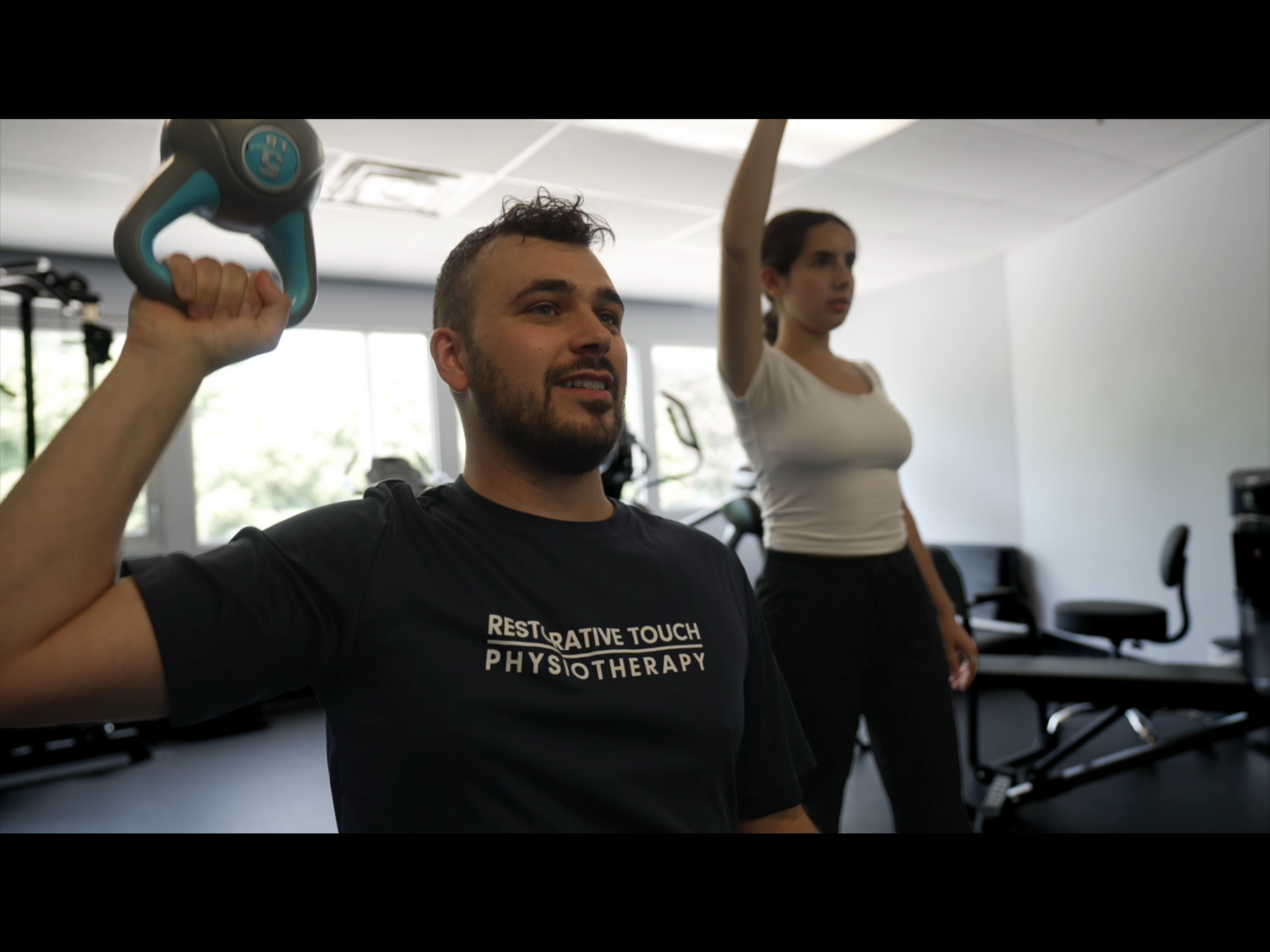
Restorative Touch Physiotherapy lists frozen shoulder among the conditions supported through our physiotherapy services. At our Hamilton Mountain clinic, assessment considers your history, current movement and the activities you want to return to.
Whether your priority is getting dressed, reaching a shelf or returning to recreation, explore our physiotherapy and rehabilitation services in Hamilton to learn more about care at RTP.
Bring your questions and describe what a better day would look like. That gives your rehabilitation plan a clear purpose beyond simply measuring shoulder movement.
This article provides general education and does not replace an individual assessment. Treatment and exercise recommendations depend on your diagnosis, medical history and any injury or surgical restrictions.